
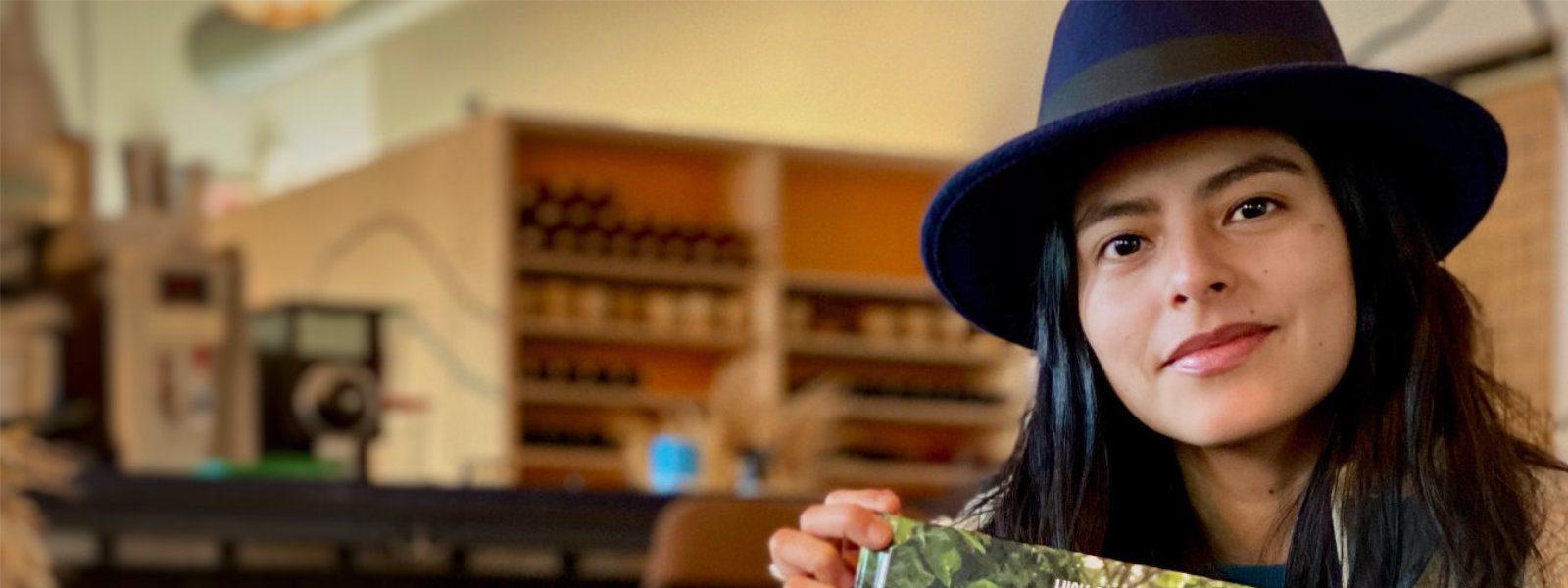
Lucía Bawot, photographer and founder of SANA, highlights the importance of listening to the people who make coffee possible and of understanding that their emotional wellbeing and mental health are also part of a more sustainable industry.
When we talk about sustainability in coffee, we tend to think of its origin, farming practices, biodiversity or fair trade. However, there is one aspect that rarely takes centre stage in that conversation: the emotional wellbeing and mental health of the people who make each harvest possible.
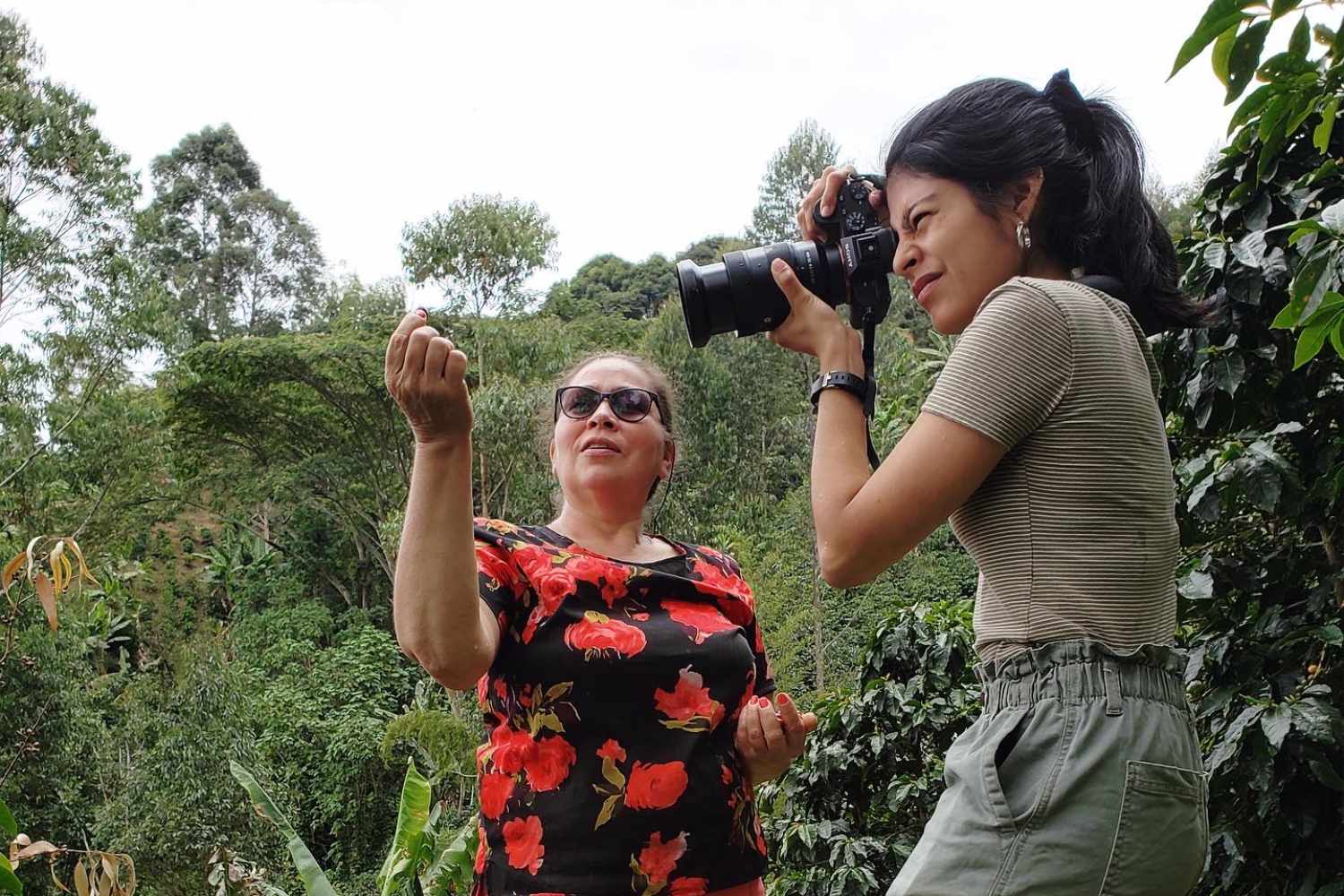
Lucía Bawot has spent more than a decade travelling through coffee-growing communities, listening to and documenting the stories of those who make their living from coffee. As the author of We Belong, a book that gives a voice to Colombian women coffee farmers, she discovered during this process that many of the conversations she had went far beyond coffee. These were accounts of human experiences, of resilience and, on many occasions, of emotional needs that rarely found a space to be heard.
From that experience, SANA was born – a foundation that runs comprehensive, online programmes focused on mental health and wellbeing for women coffee producers in Colombia, driven by the conviction that a truly sustainable industry must also look after the people who sustain it.
1. Before we talk about SANA, we’d like to get to know the person behind the project a little better. For those who aren’t yet familiar with your background, who is Lucía Bawot and how did your involvement with the world of coffee and producer communities begin?
I am a documentary photographer and videographer, born and raised amongst the Colombian mountains, which have shaped the way I see the world. Although I now live in the United States and have spent much of my life outside Colombia, I continue to find refuge, inspiration and strength in the stories of my homeland, my family and my childhood.
My coffee-growing roots come from my mother’s side of the family, but it wasn’t until 2013, when I had the opportunity to volunteer as a photographer at Sustainable Harvest’s ‘Let’s Talk Coffee’ event – which that year took place in El Salvador – that I began my own journey in this industry.
From that moment onwards, and for a decade, I had the privilege of working with numerous American companies, documenting their sustainability programmes, listening to and sharing the stories of more than 500 coffee-growing families in Central and South America. This work helped me to understand and transform my perspective on coffee. Then, in 2023, I had the opportunity to independently publish my bilingual book Pertenecemos (We Belong): An Anthology of Colombian Women Coffee Growers, which allowed me to create a tangible product with a more human focus, sharing 25 stories of Colombian women coffee growers and pickers that go beyond the work of producing coffee.
2. After spending months listening to many women coffee farmers, you felt that simply telling their stories was no longer enough, and you decided to create SANA. At what point did you realise that you needed to move on from documenting that reality to taking action on it?
Without a doubt, the moment of greatest clarity came just two months after I began travelling around Colombia to interview and document the stories of more than 60 women coffee farmers and pickers for Pertenecemos (We Belong). There was something that came up time and again at the end of our conversations. Many women would say to me: “I’ve never told anyone this before” or “Thank you for listening to me”.
What began as an interview for a book often ended up becoming a deeply personal conversation – almost like a therapy session. The women spoke to me about their worries, the burden they carried on their shoulders, experiences of violence, loss, stress, exhaustion and things they had kept to themselves for years. As someone who has also experienced mental health challenges, I realised that behind every story lay a much deeper need: the need to be listened to and supported.
That was when I realised that simply documenting their stories was no longer enough. Sharing their experiences was important, but I felt I had a greater responsibility towards all those women who had opened the doors to their homes and their lives to me. I asked myself: what can I do to ensure this conversation doesn’t end with the publication of my book?
That question was the seed from which it all grew. First came a pilot programme called Beans to Minds, funded in part by sales of We Belong and through donations. The results were so powerful that I realised this had to continue. And so SANA was born, driven by the conviction that emotional wellbeing should not be a privilege, but an opportunity available to the women who sustain our coffee-growing communities.
3. What is the SANA program and what needs does it aim to address in coffee-growing communities?
SANA is a foundation that offers comprehensive, predominantly online programmes focused on mental health and wellbeing, designed specifically for Colombian women coffee farmers, with the aim of enabling them to lead fuller and healthier lives.
Over a five-month period, we combine individual psychological support through remote counselling sessions, virtual mental health education via WhatsApp with micro-learning modules, and community meet-ups. We have designed each component to overcome barriers such as distance, lack of time, travel costs and the stigma that still surrounds mental health.
It is important to bear in mind that women carry out around 70 per cent of the work on coffee farms, yet much of this labour remains invisible or unpaid. Furthermore, they face challenges such as gender-based violence, limited access to land ownership and the so-called ‘triple burden’: caring for their families, managing household chores and working on the farm. All of this significantly increases their risk of experiencing mental health problems – by 60 per cent more than men. However, in Latin America, less than 2 per cent of health budgets are allocated to mental health, and most professionals are concentrated in cities, far from the rural communities where they are most needed.
Beyond simply diagnosing mental health issues, our aim is to provide women with a safe space where they can be heard and develop the tools to cope with the challenges of everyday life. We want to help break cycles of silence, strengthen emotional wellbeing, and foster personal agency and autonomy.
Ultimately, SANA exists because equity in the coffee sector also depends on emotional wellbeing. When a woman has access to support, tools and safe spaces to look after herself, she can improve her wellbeing, make decisions with greater confidence and take charge of her own future. Our aim is for women not only to thrive as coffee farmers, but also as leaders and agents of change within their families, on their farms and in their communities.
4. When we talk about sustainability in the coffee industry, we tend to think of environmental, economic or quality issues. Why do you think mental health should also be part of that conversation?
The reality is that we cannot speak of a sustainable industry if those who sustain it lack emotional wellbeing or the tools needed to exercise the agency and autonomy that enable them to face the challenges of their lives and their roles within society. Stress, economic uncertainty, family conflicts, traumatic experiences, bereavement, a lack of self-confidence or difficulties in communicating assertively directly affect people’s ability to make decisions, innovate, lead and give their very best. And, if we think about it, many of these challenges form part of the everyday reality of coffee producers.
That is why we believe that mental health must be an integral part of coffee sustainability. A person who feels good about themselves, who has greater emotional awareness, agency and autonomy, and who has the tools to cope with difficulties, is more likely to develop to their full potential, strengthen their family and community, and actively contribute to a coffee industry that is constantly evolving.
Furthermore, there is evidence to support this view. The study Beyond Aid: New Evidence on Displacement, Self-Reliance, and Inclusive Policy found that financial support consistently improves household food security and consumption, but does not, on its own, lead to long-term sustainable economic recovery. The researchers point out that one of the main barriers is psychological, rather than simply a lack of resources, information or knowledge. In fact, even brief interventions focusing on mental health have been shown to reduce symptoms of depression and anxiety, whilst cash transfers on their own did not produce the same results.
”My career has taught me that life — and the coffee industry — is full of nuances. Not everything is black and white; human realities exist on a spectrum of greys that require listening, empathy and openness.
Lucía BawotSANA's founder
This has important implications for the coffee sector. When a person takes part in programmes to improve agricultural practices, coffee quality or financial literacy whilst enjoying better mental health and greater psychological resources, their ability to capitalise on available opportunities, invest the resources received strategically and generate higher incomes increases. The evidence suggests that psychological capacity may be a determining factor in transforming financial support into genuine processes of self-sufficiency and sustainable development.
And this is not an idea that we at SANA are promoting on our own. The main international frameworks for sustainable development recognise the importance of mental health as a fundamental component of well-being and social progress. Our work is aligned with the Sustainable Development Goals (SDGs) of the United Nations 2030 Agenda, particularly SDG 3.4, which promotes mental health and well-being; SDG 5.B, which recognises the role of technology as a tool for the empowerment of women; and SDG 10.2, which promotes the social, economic and political inclusion and participation of all people.
We are also aligned with the World Health Organisation’s Comprehensive Action Plan on Mental Health 2013–2030, which highlights the need to build a world where mental health is valued, protected and accessible to all. In other words, if we want to build a truly sustainable coffee industry, we must recognise that emotional wellbeing is not a secondary issue: it is part of the foundation that enables people, communities and production systems to thrive in the long term.
5. Over the years, you’ve heard many female producers share their experiences. What lessons have you learnt from those conversations, and what aspects of reality do you think remain invisible to much of the industry?
I think one of the most important lessons I’ve learnt from these conversations is that we often assume that women producers need someone to come along with the answers, when in fact many of those answers are already within them.
It is not a lack of information, nor a lack of education or ability. The women we work with are deeply thoughtful, intelligent and have an enormous capacity to understand their own realities. What is often lacking is not knowledge, but safe spaces where they can be listened to, supported and have access to high-quality professionals who enable them to organise their thoughts, build their confidence and make decisions from a place of greater clarity.
But I also believe it is important not to fall into the other extreme: we cannot place the responsibility for transforming the future of the industry solely on the shoulders of women coffee farmers. It is true that many studies have shown that when women have access to resources, they tend to reinvest significantly in their families, education and their communities; we also know that they play a fundamental role in the management of farms and rural economies. But that does not mean that they must all take on a leadership role, nor that such leadership must look in any one particular way. The decision to lead must be theirs alone, on their own terms and in line with their own dreams and priorities.
Another key lesson is that we cannot discuss the coffee industry solely in terms of the end product. Coffee does not exist in isolation from the people who grow, process and sustain it. It is a deeply human industry, and we still have a great deal to learn about the women who are part of it: what they want, what they need, what challenges they face, and how we can build solutions alongside them, not for them.
I believe that one of the realities that remains invisible to much of the industry is precisely this: we still know very little about the people behind the coffee. And if we want to build a truly sustainable industry, we need to listen more, ask more questions and create spaces where communities can take the lead in conversations about their own future.
6. Since SANA first got off the ground, has there been a particular moment, conversation or story that has confirmed to you that the project was making a real difference to the lives of the women taking part?
Phew… I think that every time a programme ends and I get the chance to sit down and read the post-programme surveys, I’m reminded once again why SANA exists. The data shows us that there really is a need, that women feel that void, but above all that the tools we offer them can bring about real changes in their everyday lives.
Beyond the figures, it’s their own words that most confirm to me that we’re making a difference. Hearing a woman say that she now feels calmer, that she’s learnt to make time for herself, that she can communicate better with her family, or that she’s achieving things she once thought impossible, is the most powerful reminder that mental health also transforms communities.
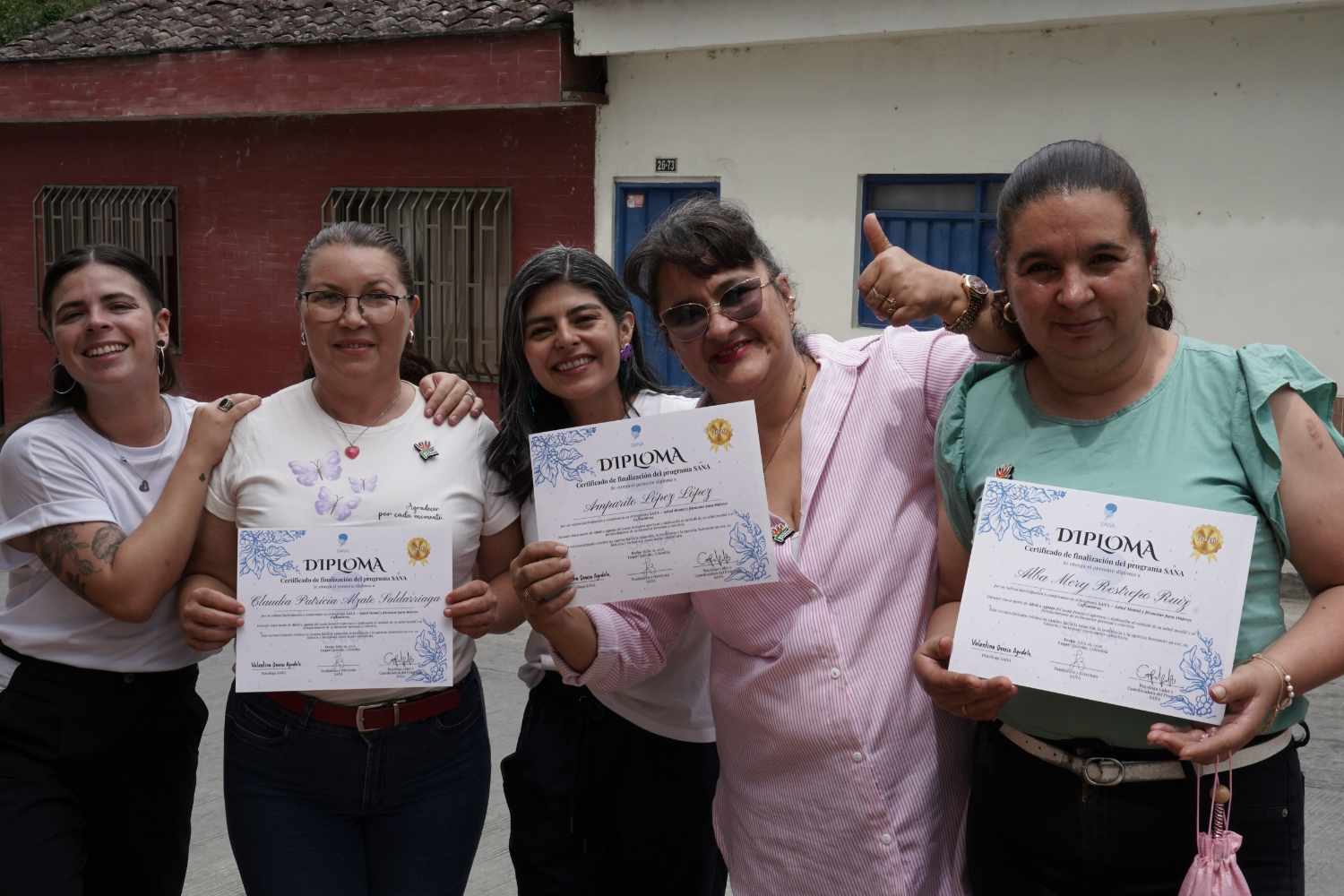
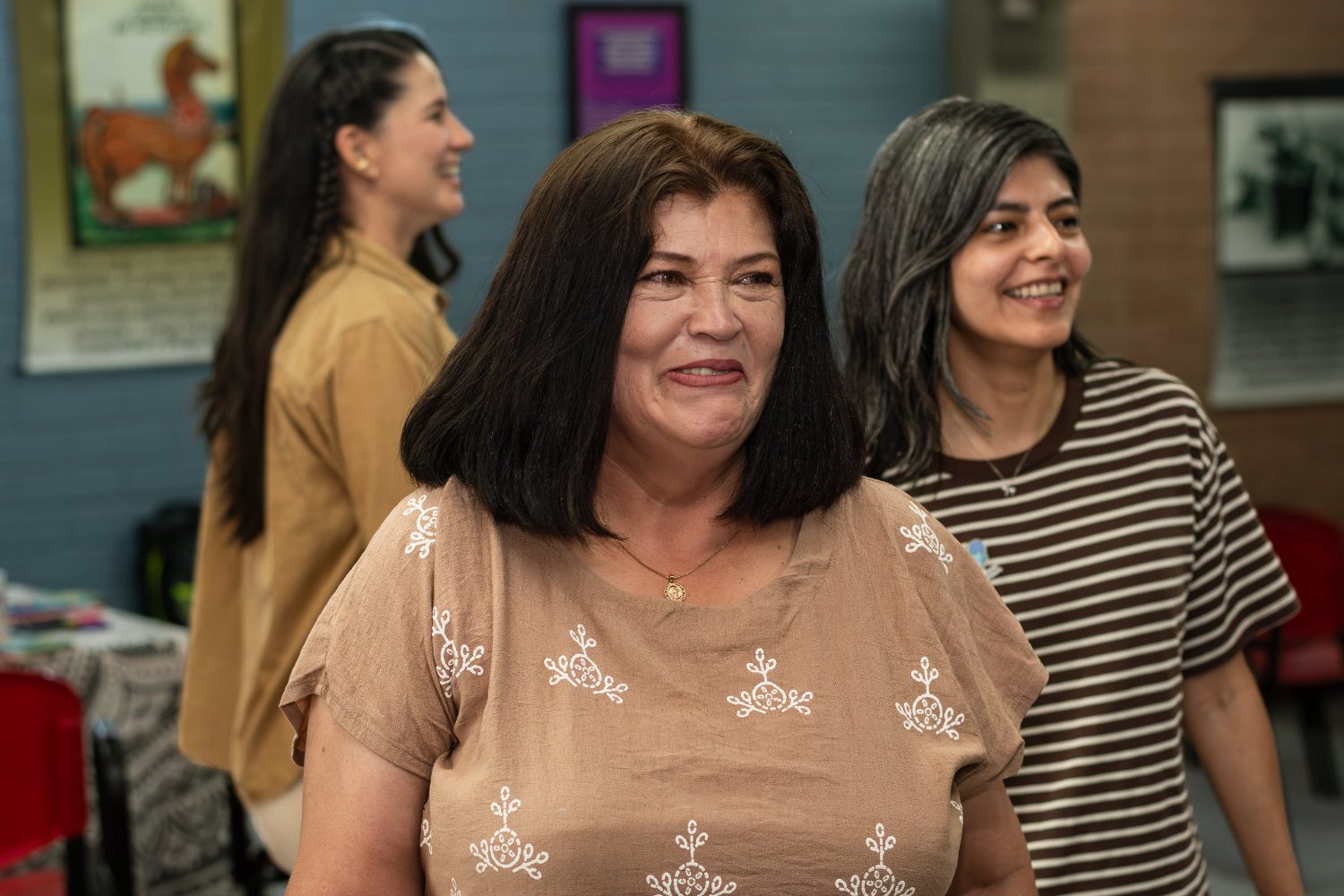
Some women who completed the programme in 2025 shared the following with us:
“I feel calmer, lighter, much better. I’m less stressed because I’m making more time for myself. I now make time to spend with my friends. I have a better attitude towards my family and I get up earlier.”
“I’ve learnt to have more confidence in myself. I’ve been able to resolve many issues with my family, and specifically with my husband. Before, I used to say I couldn’t do it, and people would tell me the same. But now I’m managing to fix them.”
Each testimony represents something deeper: a woman who is beginning to listen to herself, to recognise her own worth, to set boundaries, to ask for help and to believe in her own abilities once again. And that, for me, is the true evidence that SANA is working.
7. In many rural communities, talking about mental health remains a sensitive issue. How have you managed to build trust so that women feel comfortable taking part and talking about it openly?
I believe that today, more than ever, it is important to recognise that we often arrive in communities with preconceived ideas about what they need. We continue to operate from a sort of invisible pyramid where, in a very subtle way, we assume that those coming from outside have more knowledge or better answers than the communities themselves. And that perspective can perpetuate forms of colonialism, even if our intentions are good.
At SANA, we start from a different premise: the women we work with are experts in their own lives. They know their own realities, their challenges and their communities. Our role is not to come in to ‘save’ them or impose solutions, but to create safe spaces where they can recognise their own capabilities and access tools that enable them to navigate life with greater clarity and well-being.
That is why trust begins before a woman joins the programme. We reach out through local partners, women leaders, community leaders, associations and cooperatives that have already built a relationship with them. We explain the programme with honesty and warmth: not as a ‘treatment’ because something is ‘wrong’ with them, but as a space for learning, support and self-care that we all may need at some point in our lives.
We also discuss mental health through the lens of universal human experiences: stress, emotions, change, fears, relationships and the difficult times we all go through. This helps to reduce stigma and to understand that asking for support is not a sign of weakness, but a tool for living a better life.
The data from our post-programme surveys show that this trust exists. In 2026, 39 per cent of women told us that, when they decided to join, they already knew they needed a space like this; 32 per cent were going through a difficult situation; and 26 per cent came simply out of curiosity or because they wanted to try something new.
For us, that last group is also very important: it shows that mental health should not be addressed solely in times of crisis, but also through prevention, personal growth and the promotion of wellbeing. Trust is built when women feel that we are not there to tell them what to do, but to walk alongside them.
8. We often talk about raising the profile of work at source, but what does it really mean to support the people who produce coffee? Do you think that consumers, roasters and other players in the value chain can also play a part in bringing about this change?
I believe that supporting the people who produce coffee goes far beyond simply giving them visibility. Visibility is important, but it is not enough if it is not accompanied by a willingness to listen, respect and real opportunities.
For many years, we have talked about coffee in terms of the product: its quality, flavour profiles and processing methods. But behind every cup there are people, families and communities with their own stories, knowledge and dreams. Supporting producers at source means recognising that coffee producers are not merely suppliers within a value chain; they are the driving force behind an industry that exists thanks to them.
But this industry belongs to all of us. Not just to those who grow, buy or sell coffee, but also to those of us who drink it every day. Change begins with conscious decisions: asking ourselves what coffee we are buying, which companies we are supporting and what values we want to promote through our consumption.
9. Your career has taken you from documenting stories to spearheading a project with a social impact. How has that journey changed the way you understand coffee?
My career has taught me that life — and the coffee industry — is full of nuances. Not everything is black and white; human realities exist on a spectrum of greys that require listening, empathy and openness.
I have learnt that there is no single way to bring about change. Transformations take time, evolve and require the ability to adapt constantly. What works today may need to change tomorrow, and therein lies the value of cognitive flexibility: in our ability to learn, adapt and build sustainable solutions.
Today, I see coffee not just as a product, but as a human ecosystem. The future of this industry depends on our ability to listen more effectively, understand more deeply and work alongside the people who make it possible.
10. Finally, we’d like to continue discovering voices that offer a different perspective on speciality coffee. Is there anyone or any project that you find particularly inspiring and would like to recommend for a future interview on XORXIOS®?
I would certainly recommend checking out the work of Raise the Bar, a not-for-profit organisation that is rethinking how we understand professional development within the speciality coffee industry.
I find their approach particularly inspiring because they put the people who sustain the industry day in, day out at the centre: baristas and coffee professionals in the early stages of their careers. Through accessible, community-led programmes, they work to build skills, create opportunities and promote a more equitable industry.
I believe their perspective brings a much-needed conversation about the future of coffee: not just how we make better coffee, but how we build better conditions for the people who make this industry possible.