
EUDR and coffee: A comprehensive guide to the EU Regulation on Deforestation
2026
Intellectual Property
XORXIOS®
The entry into force of the EUDR — the European Union Regulation on Deforestation — introduces a new dimension to the way coffee supply chains are managed.
The aim of the EUDR is to reduce the impact of the European Union’s trade on deforestation and forest degradation worldwide. To this end, the Regulation stipulates that certain raw materials and products that are traded, made available on the European Union market or exported must be able to demonstrate that they meet requirements relating to their origin, traceability, legality and the absence of deforestation.
For coffee, this means that information on origin takes on much greater significance. Traceability is no longer merely a commercial or quality-assurance tool; it has become part of the mechanisms used to demonstrate compliance with a regulatory obligation.
This does not mean that all actors in the chain have to do the same. The obligations depend on the position each company occupies within the supply chain and the type of operation it carries out.
The aim of this guide is to explain, in a clear and practical way, what the EUDR entails for the coffee sector and, in particular, for the various stakeholders involved in its value chain. As we outlined in our article on the EUDR and specialty coffee, the implementation of this regulation introduces significant changes to the way in which coffee information and traceability are managed.
Our aim is to make complex regulations easier to understand and to help our clients and partners understand what information they need, what their responsibilities are, and how the way coffee sourcing is managed is changing.
Guide contents
What is the EUDR?
The EUDR is the Regulation (EU) 2023/1115 of the European Union on raw materials and products associated with deforestation and forest degradation, including coffee.
The Regulation prohibits the marketing, making available on the European Union market and export of certain relevant products where they do not comply with the conditions laid down in the Regulation.
The EUDR defines a ‘relevant product’ as certain raw materials and products falling within its scope. To identify them, Annex I to the Regulation sets out a list of products classified according to the European Union’s Combined Nomenclature (CN) codes. This classification makes it possible to determine which goods are subject to the requirements of the EUDR.
In the case of coffee, the Regulation includes products classified under code 0901, which covers coffee, whether or not roasted or decaffeinated, as well as coffee husks and skins and coffee substitutes containing coffee.
The Combined Nomenclature (CN) forms the basis for the tariff classification of goods in the European Union. The TARIC system is based on this classification and incorporates the measures and requirements applicable to import operations.
If you would like to find out more about how this classification works and the role played by the TARIC code in coffee imports, you can also read our article on documentation and customs procedures for coffee imports: Documentation and customs procedures for coffee imports.
The EUDR is not limited to goods imported from third countries. It may also apply to products made from raw materials produced within the European Union itself when they are subsequently placed on the market or exported.
What does the EUDR require?
For a product falling within the scope of application to be placed on the market, made available or exported, it must cumulatively meet three conditions:
- It must be free from deforestation.
In the case of agricultural raw materials, they must come from land that has not been subject to deforestation after 31 December 2020.
It must have been produced in accordance with the relevant legislation of the country of production.
The concept of legality is broad and includes, amongst other elements, the land rights of indigenous peoples, environmental and forestry legislation where applicable, labour and human rights, and certain tax, trade and anti-corruption obligations.
It must be covered by the due diligence mechanism established by the Regulation.
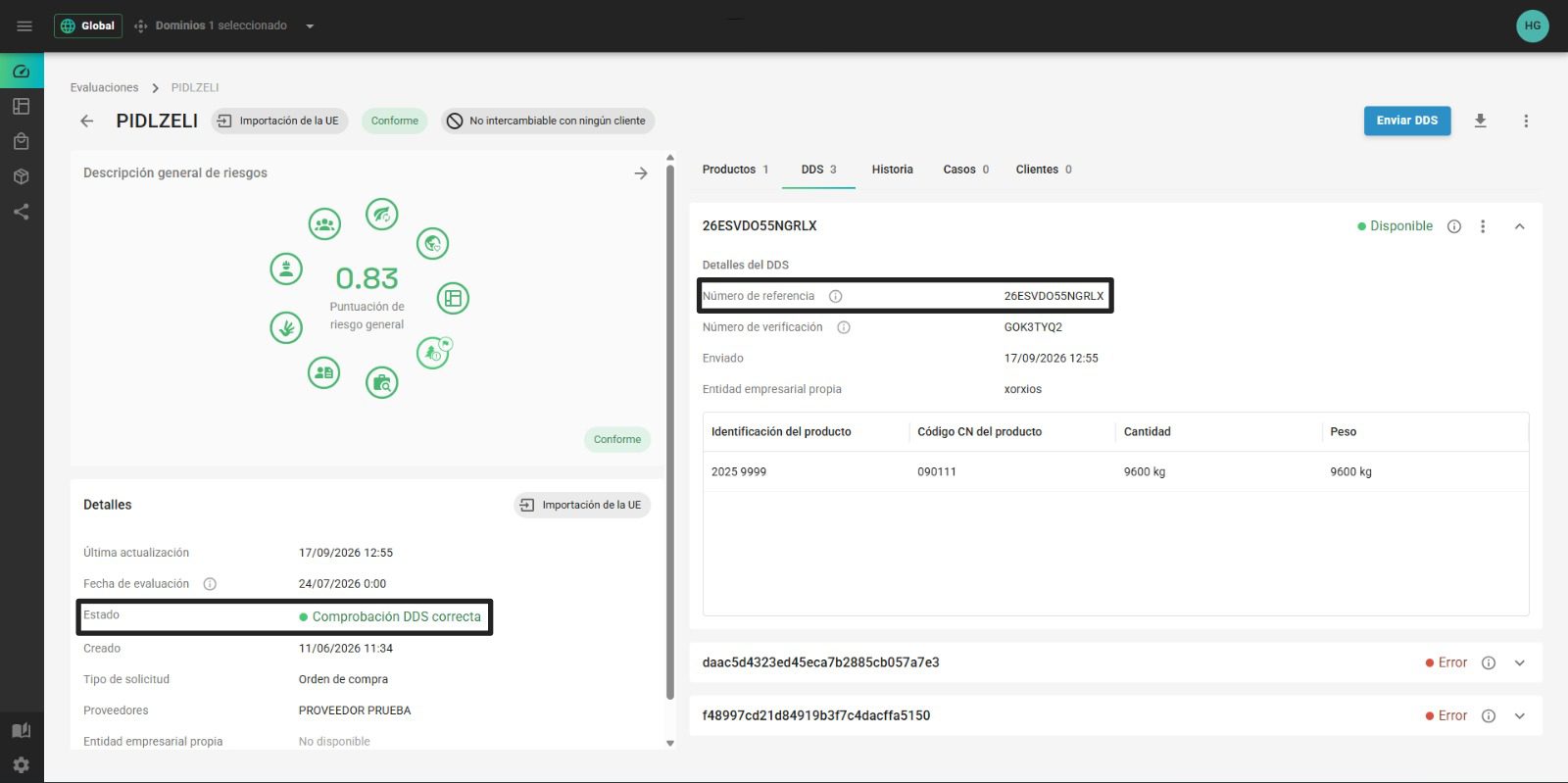
Depending on the type of operator and the specific situation, this is achieved through a Due Diligence Statement (DDS) guaranteeing the above or, in the cases provided for by the Regulation, through a simplified declaration.
The reform introduced by Regulation (EU) 2025/2650 has significantly altered the obligations of downstream actors in the supply chain, meaning that not all of them are currently required to submit their own DDS. The DDS must be submitted to the EUDR Information System (TRACES) prior to the product being placed on the market, made available or exported.
What does it mean for coffee to be deforestation-free?
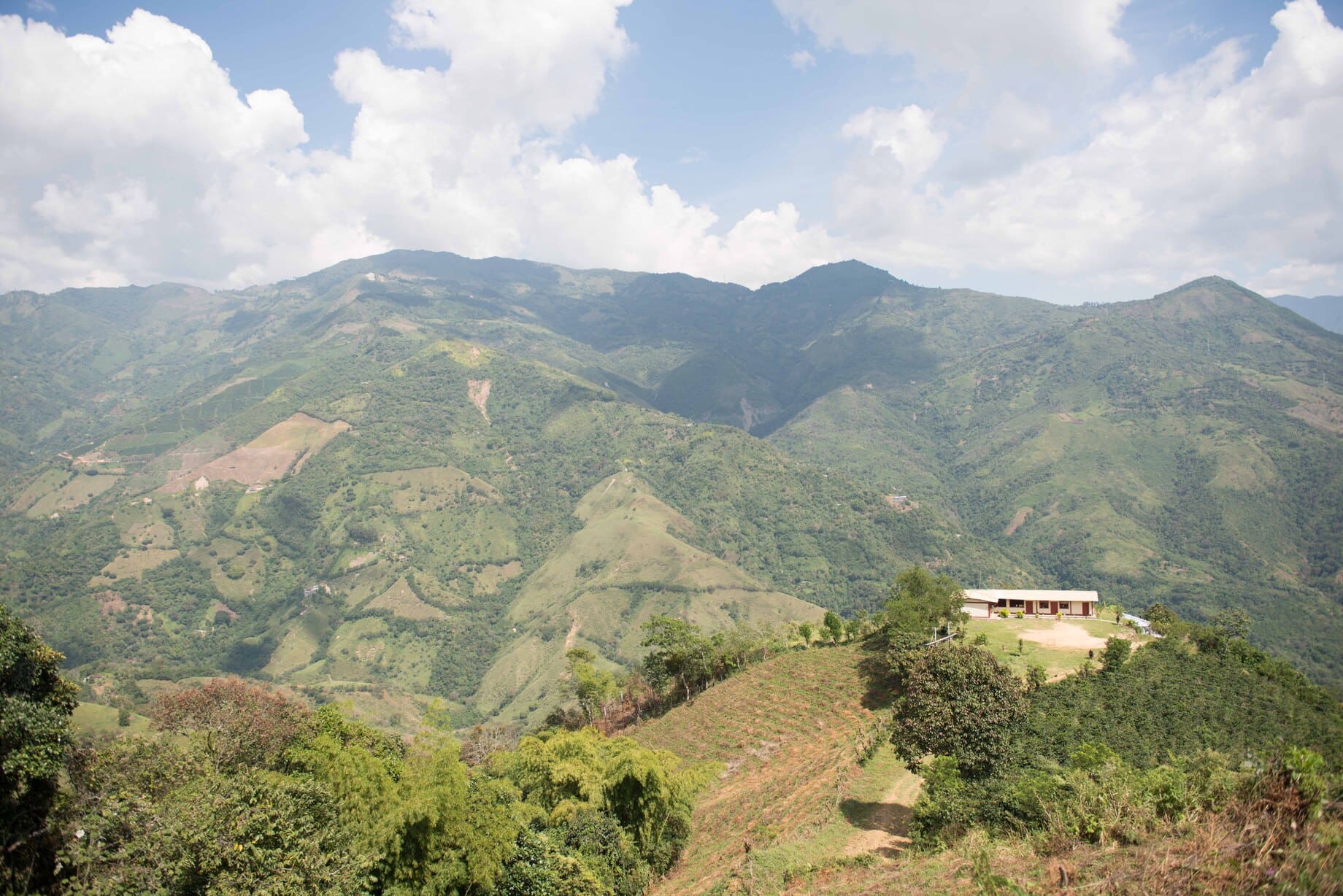
One of the key reference dates under the EUDR is 31 December 2020, the date from which the Regulation stipulates that no conversion of forest to agricultural use may have taken place on the plots from which the coffee originates.
In other words, for coffee to be considered deforestation-free for the purposes of the EUDR, the plots where the raw material was produced must not have undergone such a conversion after that date.
This date does not mean that the plot must have been registered in a European system since 2020, nor that the producer was required to carry out any EUDR-related procedures at that time. It means that the land’s status with regard to deforestation is assessed using that date as a reference point.
This introduces a significant difference from the traditional way of identifying the origin of coffee. In the specialty coffee sector, it is common to refer to:
- country of origin;
- region;
- department or province;
- municipality;
- farm;
- co-operative;
- producer;
- micro-lot;
- export lot.
These data remain relevant, but the EUDR introduces an additional level of traceability: where required by the Regulation, it must be possible to link the product to the plots of land where the raw material was produced and to the information necessary to verify compliance with its requirements.
For this reason, geographical traceability takes on particular importance: it enables the coffee being marketed to be linked to a specific location and the corresponding land use to be assessed.
Traceability and geolocation: from ‘origin’ to the plot
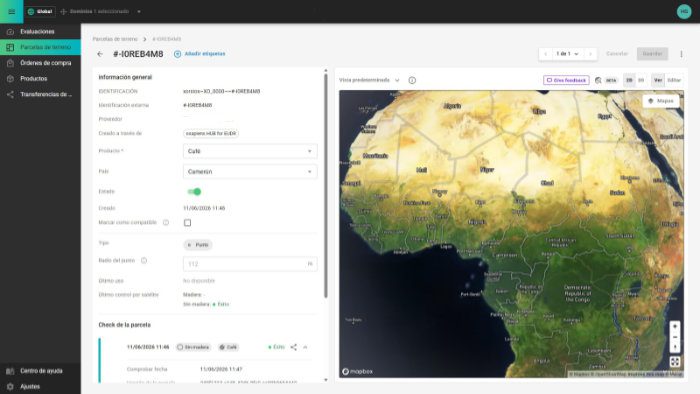
One of the most significant changes introduced by the EUDR is the importance of geolocation. For operators subject to the due diligence obligation, the Regulation requires them to hold geographical information on the plots of land where the relevant raw materials were produced.
In practical terms, this means moving from identifying the origin based mainly on a commercial description to a traceability system that allows the product to be linked to the plots where the raw material was produced.
The information required does not necessarily have to follow the same commercial structure that a company uses to present a coffee to its customers. A coffee may be sold as a micro-lot, a blend from small-scale producers or a batch from a cooperative. What matters for the EUDR is that the system used allows the link between the product and the corresponding plots to be established in a consistent manner.
How does geolocation work?
- for parcels of up to 4 hectares, the location may be indicated by a set of coordinates, with latitude and longitude expressed to at least six decimal places;
- for parcels larger than 4 hectares, a polygon representing the perimeter of the parcel must be provided
There is a specific exception which means that georeferencing data is not required for the due diligence process. When the operator (the party placing the goods on the European market) is also a producer and a small or micro-enterprise, they may choose to use their registered address or the address of their premises as valid georeferencing data.
What is the Due Dilligence?
Due Diligence is the process by which the operator determines whether a relevant product complies with the requirements of the EUDR. In simple terms, it can be understood as comprising three stages:
1. Gathering information
The operator must obtain the necessary information about the product, its origin and the circumstances of its production. In the case of coffee, this may include:
- a description and quantity of the product;
- country of production;
- information on operators and suppliers;
- traceability data;
- geolocation of plots where required;
- information relating to the legality of production.
2. Assessing risk
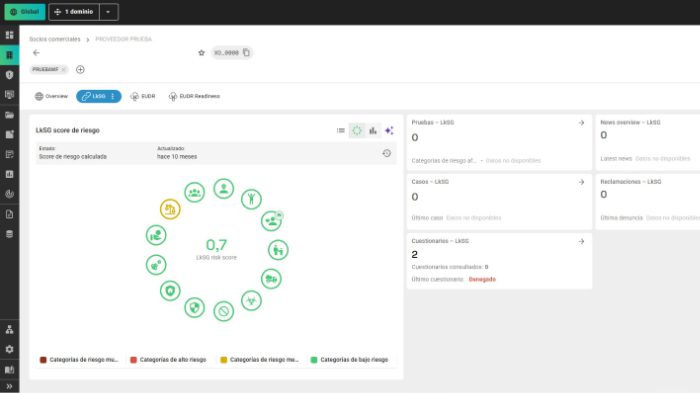
Where a risk assessment is required, the operator must consider factors such as the risk level of the country of production, the complexity of the supply chain, the risk of mixing, the possibility of circumvention and other relevant information.
The EUDR establishes a classification of countries based on their risk level.
In countries classified as low-risk, a simplified due diligence process applies. This does not mean that all information requirements are waived: specific obligations regarding the collection of information and other checks provided for in the Regulation still apply.
For countries classified as standard or high risk, the operator must carry out a full risk assessment and, where necessary, implement mitigation measures until a negligible level of risk is achieved.
3. Mitigating risk where necessary
If the assessment identifies a risk of non-compliance that cannot be considered negligible, appropriate mitigation measures must be taken. These may include requesting additional information, supplementary documentation, or more in-depth verifications or checks on the supply chain.
Traceability and product blends
Traceability is particularly important because the EUDR does not permit a mixture to make it impossible to demonstrate the origin and compliance of the products it comprises.
For example, if a raw material whose compliance with the EUDR is certified is mixed with another whose origin or compliance cannot be demonstrated, and it is subsequently impossible to identify which part corresponds to each, the company may not be in a position to demonstrate that the product placed on the market complies with the requirements of the Regulation.
For this reason, the EUDR should not be understood simply as a ban on the mass balance model. What is important is that the traceability system used allows the origin and compliance of the relevant product to be demonstrated, and that mixtures do not make it impossible to maintain that traceability.
Who is affected by the EUDR?
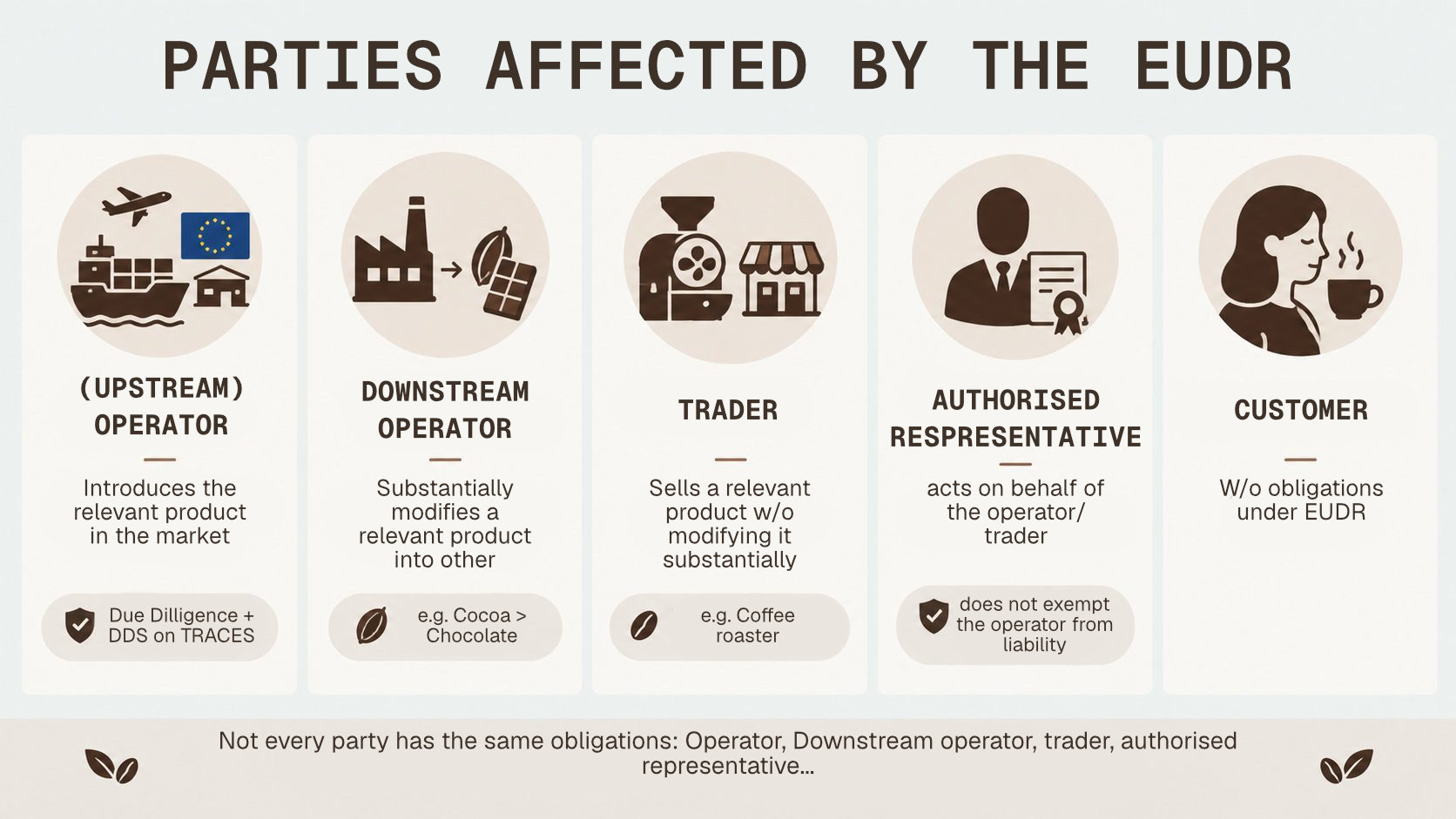
Not all actors in the coffee supply chain have the same obligations. This is probably one of the most important issues for understanding the practical application of the Regulation. Following the 2025 reform, the Regulation clearly distinguishes between operators, downstream operators and traders, each with different obligations.
Operator (or upstream operator)
Put simply, this is the party who first places a relevant product on the Union market or who exports it.
This is the party generally responsible for carrying out due diligence on the product they place within the regulated area and for submitting the Due Diligence Declaration to be uploaded to the EU Information System (TRACES).
For example: as XORXIOS® are the parties placing the goods into the single customs territory, we are considered an upstream operator.
Downstream operator
Introduced specifically by the 2025 reform, this is an operator who manufactures or transforms a product subject to the EUDR from another product that has already complied with due diligence obligations, and subsequently places it on the market in the EU or exports it.
A clear example of a downstream operator would be a ‘bean-to-bar’ chocolatier. This operator purchases cocoa, code 1801, from an upstream operator and processes it into chocolate, code 1806. Both codes are listed separately in Annex 1 of the EUDR, meaning that this company would be considered a downstream operator.
Trader
A trader is a person in the supply chain, other than the operator or downstream operator, who, in the course of a commercial activity, makes a relevant product available on the market. A distinction is made between large traders and SMEs, which have different obligations.
A roaster would be a clear example of a trader: they purchase green coffee from an operator and roast it. In this process, green coffee, code 0901 11, becomes roasted coffee, code 0901 12. The TARIC code changes, but if we refer to Annex 1 of the EUDR, we see that both green coffee and roasted coffee fall under the common code 0901, and no further distinction is made. By grouping green and roasted coffee together, Annex 1 indicates that, for practical purposes, roasting coffee does not constitute a relevant transformation under the EUDR; consequently, the roaster neither naturalises goods within the EU (they are not an operator) nor transforms them in a relevant manner (they are not a downstream operator).
Authorised representative
May act on behalf of an operator or trader in relation to certain actions provided for in the Regulation. Such representation does not relieve the operator of its responsibility for the compliance of the product.
End consumer
No obligations under the EUDR.
The role of the Importer under the EUDR
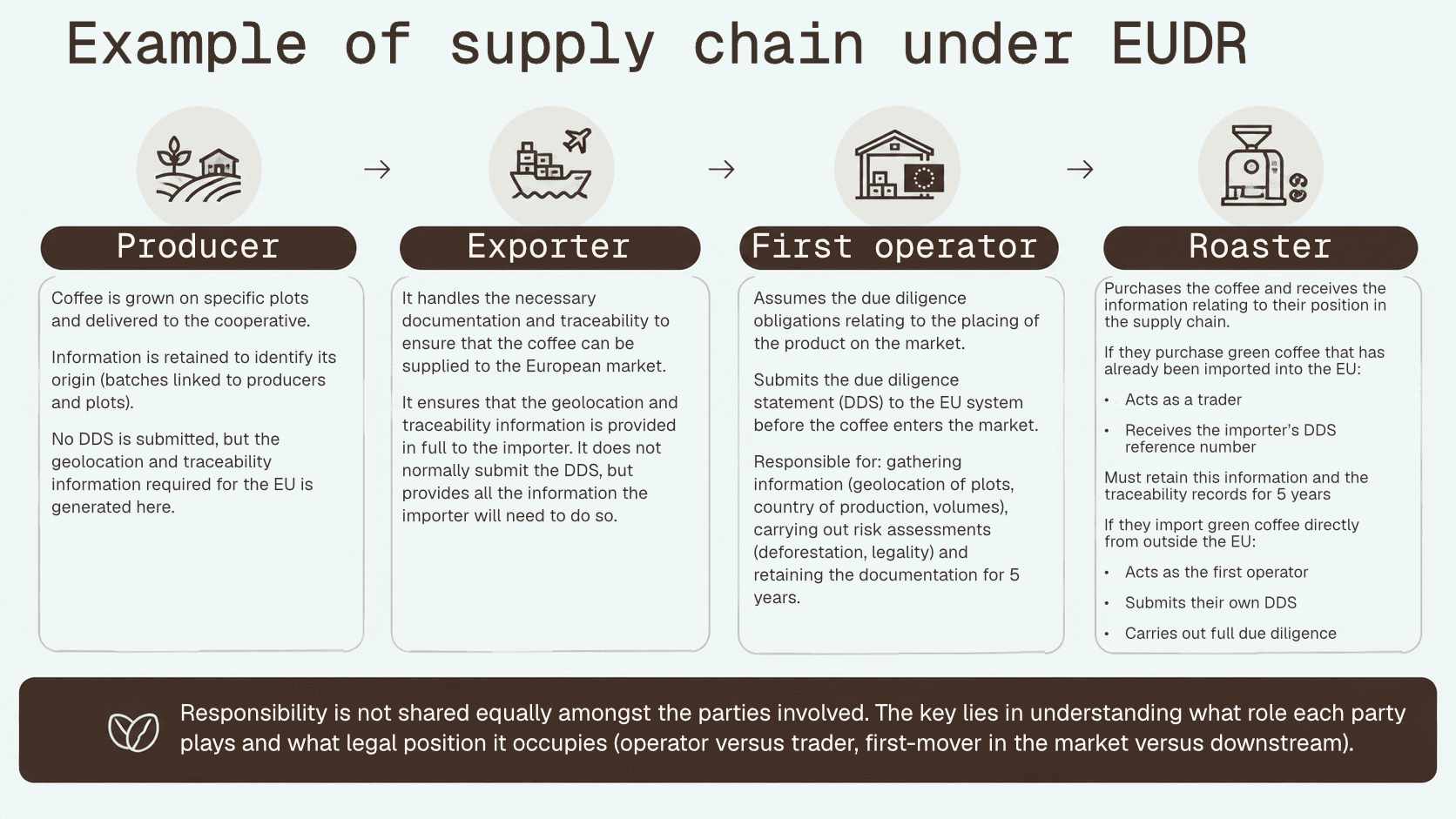
In a coffee supply chain originating in a third country, the importer may play a central role because placing the product on the European market triggers the obligations incumbent on the operator.
Generally speaking, the operator must be able to demonstrate that the product complies with the requirements of the EUDR. This involves working with information on:
- the product;
- the country of production;
- the plots;
- traceability;
- the legality of production;
- identified risks;
- mitigation measures where necessary.
Geographical information on the plots is one of the most important elements of this system. It is also necessary to retain the Due Diligence Statements and the relevant documentation for five years, in accordance with the obligations applicable to the operator.
The submission of a DDS does not constitute prior ‘approval’ by the authorities. The competent authority may carry out checks at a later date. This is important because a DDS should be understood as a declaration relating to the operator’s responsibility, not as a certificate issued by the authorities.
The role of the Downstream Operator
The downstream operator is a category introduced and redefined by the 2025 reform of the Regulation.
A downstream operator is an operator who, without necessarily importing the goods from outside the EU, substantially transforms them to create a new relevant product (e.g. cocoa into chocolate). Their obligations are as follows (Article 5; Reg. (EU) 2025/2650):
For all downstream operators:
- To retain, for at least 5 years, the reference numbers of the DDSs covering the goods.
- To identify their suppliers and customers that are businesses (not the end consumer).
For medium-sized and large companies (additional requirements):
- Register with the EUDR Information System (TRACES).
- Verify the validity of the DDSs for purchased products where there are justified concerns.
- Provide the competent authorities with the DDS reference number and the batch traceability documentation.
Transformation: when does a company’s role change?
The transformation of a key product can determine a company’s position within the supply chain. There is a distinction here that is particularly useful for understanding the case of coffee.
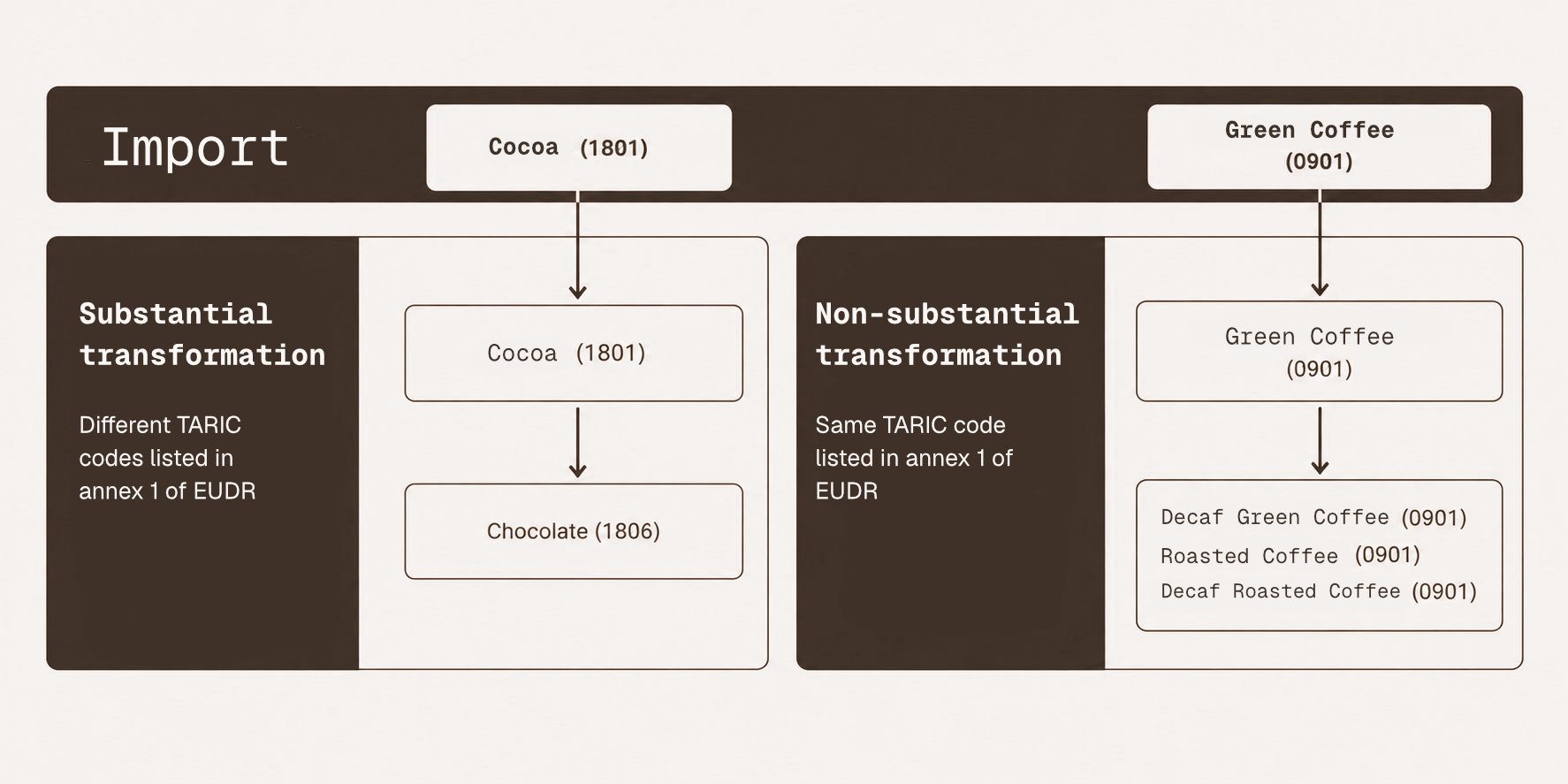
In the case of coffee, the various relevant forms are classified under heading 0901. Consequently, the transformation of green coffee into roasted or decaffeinated coffee does not in itself result in a new relevant product for the purposes of Annex I, which is a fundamental difference compared with the example of cocoa.
For a coffee roasting company, this means that the act of roasting green coffee does not automatically make it a downstream operator simply because it physically transforms the coffee.
The role of the Trader
A trader is any person in the supply chain who is neither an operator nor a downstream operator (i.e. who does not import or substantially process a relevant product) and who makes a relevant product available on the market.
Their role is primarily one of traceability and information provision.
Downstream operators and traders must collect and retain information on their suppliers and on the businesses to which they supply the product. Where the supplier is an operator, they must also retain the reference numbers of the due diligence statements or the identifiers of the relevant statements.
This information must be retained for at least five years. Traders and downstream operators who obtain relevant information indicating a possible breach must act in accordance with the notification obligations set out in the Regulation.
In the case of downstream operators and traders that are not SMEs, there are also specific obligations where, prior to placing a product on the market or exporting it, they obtain information indicating that a product may not comply with the Regulation. If there are justified concerns, they must verify that due diligence has been exercised and that there is no more than a negligible risk before proceeding with the transaction.
Possible penalties for non-compliance
The EUDR establishes a system of penalties to ensure that the various actors in the supply chain comply with their obligations. Article 25 sets out various measures that Member States may apply depending on the nature and severity of each breach.
It is important to put these provisions into context: the Regulation does not impose an automatic penalty for every breach, nor does it assign the same level of responsibility to all participants in the chain. The obligations of an operator, a subsequent operator and a trader differ, and therefore so does the scope of their responsibilities.
The measures provided for in the Regulation include:
- Fines proportionate to the nature and seriousness of the infringement, taking into account, amongst other factors, the environmental damage and the value of the products concerned. For legal persons, the penalty system must allow for the maximum amount of the fine to be at least equivalent to 4 per cent of the total annual turnover achieved within the Union during the previous financial year.
- Confiscation of the products concerned and of the proceeds derived from transactions relating to them.
- Temporary exclusion from public procurement procedures and public funding, for a maximum period of 12 months.
- In certain cases of serious or repeated infringements, a temporary ban on placing the products concerned on the market, marketing them or exporting them.
- In those same cases, a restriction on the use of the simplified due diligence procedure.
In practice, these measures must be understood within the context of the EUDR’s overall control system. Not all companies are subject to the same obligations, nor does any documentation issue automatically result in a penalty. The competent authorities will assess the specific non-compliance, the circumstances of the case and the obligations applicable to each company.
For a roaster, therefore, the most important thing is to understand the role their company plays within the supply chain and to have the necessary information and documentation from their suppliers in order to demonstrate compliance with their relevant obligations.
The aim of the system is for traceability and due diligence to form part of the orderly management of the supply chain, rather than making compliance with the EUDR a source of uncertainty for companies.
EUDR and certifications
Sustainability certifications can provide useful information for a supply chain, but should not automatically be equated with compliance with the EUDR.
A certification may cover aspects relating to:
- agricultural practices;
- sustainability;
- social conditions;
- traceability;
- environmental management;
- chain of custody.
However, compliance with the Regulation depends on the requirements set out by the EUDR itself. Therefore, holding a certification does not automatically mean that a company is exempt from its relevant obligations.
At the same time, certain existing certifications, traceability systems and information tools can facilitate the collection of data that may subsequently prove useful for compliance.
EUDR Implementation dates
The EUDR has undergone significant changes since its initial adoption. Following Regulation (EU) 2025/2650, the key implementation dates are:
- 30 December 2026: general implementation for large and medium-sized enterprises.
- 30 June 2027: implementation for micro and small enterprises covered by this extended period.
The exact date may also depend on the company’s legal status and the applicable transitional provisions.
Special Cases
The practical application of the EUDR may give rise to situations in which the same company occupies different positions within the supply chain, or in which it is necessary to take the transitional period into account.
These are some of the scenarios that may arise.
A medium-sized or large company purchasing goods from a micro or small operator during the transitional period
It may be the case that a medium-sized or large company purchases products from a micro or small operator during the period in which the transitional arrangements for such operators are still in force.
Coffee imported by an upstream operator during the transitional period is exempt from the requirement to submit a DDS and from risk analysis procedures under the EUDR. This exemption extends to the subsequent links in the supply chain, provided it can be demonstrated that the coffee was released for free circulation during the transitional period by a company covered by that regime.
Upstream operator who also processes the raw material
A company may occupy more than one position within the supply chain.
For example, it may introduce a relevant raw material into the EU and subsequently process it to obtain another relevant product. In this case, it may act as an upstream operator in relation to the first operation and as a downstream operator in relation to the second.
The specific obligations must be analysed on the basis of the relevant products involved and the traceability rules applicable to them. However, having the information relating to its position as an upstream operator may facilitate compliance with its obligations as a downstream operator.
Importing a relevant raw material and purchasing another raw material to manufacture a product
It may also be the case that a company directly imports a relevant raw material and, at the same time, purchases another relevant raw material from another operator in order to manufacture a subsequent product.
In this situation, different positions and obligations may coexist within the same company. The company must therefore analyse the following separately:
- the product it imports directly;
- the product it purchases from another operator;
- the resulting product;
- the associated declarations or identifiers;
- the traceability required to demonstrate compliance.
Producer at origin who places the goods directly on the EU market
The obligation does not depend solely on a company being a producer.
If the producer located at origin is the one placing the goods on the European market, they may directly assume the obligations incumbent on the operator. In that case, they must analyse the administrative and operational requirements necessary to act as an operator, including those relating to the information system and, where applicable, customs identification.
What does the EUDR mean for a specialty coffee roaster?
For a specialty coffee roaster, the EUDR does not necessarily mean assuming the obligations that fall to the operator placing the coffee on the European Union market. As we have seen previously, its impact depends first and foremost on the role the roaster plays within the supply chain.
However, the EUDR does introduce a significant change in the way coffee’s origin is managed. Much of the data that already forms part of standard traceability for specialty coffee — the country of origin, region, farm, cooperative, producer, micro-lot or export lot — takes on a new dimension when it must also be used to demonstrate compliance with regulations.
This makes it particularly important to distinguish between commercial traceability and regulatory traceability.
A coffee may be perfectly traceable from a commercial perspective and yet still require additional information to meet the requirements of the EUDR. For example, knowing that a coffee comes from:
Colombia → Huila → Grower/co-operative
may be sufficient to explain its origin and differentiate it commercially. However, this information does not necessarily equate to having the geographical data required by the EUDR for the plots on which the coffee was produced.
The difference is significant: commercial traceability aims to explain where a coffee comes from and what makes it different; the traceability required by the EUDR must also make it possible to demonstrate that the product complies with the requirements set out in the Regulation.
For the roaster, this means that it is not enough to have a good understanding of the coffee from a commercial perspective. They must also understand what information they need to receive from their suppliers and what obligations they actually have, depending on their position in the supply chain.
In this regard, the EUDR may reinforce a trend that was already present in the speciality coffee sector: gaining a more precise understanding of where the coffee comes from and improving transparency throughout the supply chain.
How can a roaster prepare?
Preparing for the EUDR does not necessarily involve creating new, complex procedures. For a roaster, it may be sufficient simply to be clear about who supplies their coffee, what role that supplier plays in the chain, and what information must accompany the product at each stage.
It is also advisable for the company to be able to link the information received to the coffees and batches it purchases, and to know how to act if it subsequently receives information that may indicate a potential breach.
To maintain traceability and ensure EUDR compliance, the roaster should avoid making the following mistakes:
- Mixing batches without proper control.
- Losing track of the origin.
- Separating the product from its documentation.
- Declaring an origin other than that received.
- Altering EUDR information.
In short, preparing for the EUDR mainly involves incorporating the relevant information into day-to-day procurement management and understanding the obligations that fall to the company itself, without automatically assuming those that fall to other actors in the supply chain.
Frequently Asked Questions about EUDR
The implementation of the EUDR raises questions, particularly when attempting to apply the Regulation to specific situations within the supply chain. These are some of the most frequently asked questions.
What should a roaster do to prepare for the EUDR?
It is not necessarily a matter of taking on new obligations, but rather of being clear about their role in the chain, who supplies them with coffee, and what information must accompany each transaction.
It is also advisable to be able to link this information to the coffees and batches purchased, and to have a procedure in place for taking action should information emerge that might indicate a potential breach.
If the country of production is classified as low-risk, do I need geolocation data?
Yes, as a general rule. The low-risk classification simplifies certain aspects of due diligence, but does not automatically waive the reporting requirements. There are also specific exemptions for certain micro and small primary operators.
If I have a certification, does that mean the coffee already complies with the EUDR?
Not necessarily. A certification may provide useful information to demonstrate certain aspects of the supply chain, but compliance with the EUDR is determined in accordance with the requirements set out in the Regulation.
Does the coffee roaster have to carry out the importer’s due diligence?
Not necessarily. The obligations depend on the company’s legal status and the transaction it carries out. Purchasing coffee from a supplier within the European Union does not automatically make the roaster the operator who carried out the import.
Does any processing make a company a subsequent operator?
No. Processing, in itself, does not determine this status. It must be checked whether the result of the operation is another relevant product falling within the scope of the EUDR.
Coffee and cocoa provide a good example: the processing of green coffee into roasted coffee falls within the same relevant product code, whilst certain processing operations involving cocoa may result in another product covered by the Regulation.
Does the EUDR only apply to companies that import?
No. The Regulation sets out obligations for various actors in the supply chain and also applies to certain products produced within the European Union. The specific obligations depend on the role played by each company.
Is the EUDR merely a matter of documentation?
No. Documentation is an important part of the process, but the aim is to be able to consistently demonstrate the link between the product, its origin, its traceability, the status of the plots of land and compliance with the applicable legislation.
Is knowing the country of origin sufficient to comply with the EUDR?
Not necessarily. The country of origin is a first layer of information, but the EUDR may require much more precise information on where the raw material was produced, including the geolocation of the plots where applicable.
Do all actors in the supply chain need to have the same information?
No. The obligations and the information required depend on each company’s position in the supply chain, the product and the operation carried out. That is why it is important to distinguish between the information used to describe a coffee commercially and the information required to comply with the EUDR.

The future with the EUDR
Compliance with the EUDR poses a challenge for the entire supply chain. It is not merely a matter of introducing new documents or procedures, but of establishing systems that enable the consistent management of information regarding the origin, traceability and legality of products.
In this process, the importer plays a particularly important role, acting as a link between the supply chains of origin and the European market. The quality and reliability of the information they receive, verify and make available to the rest of the chain will be crucial in facilitating compliance with the Regulation.
For specialty coffee, the EUDR further reinforces a trend that the sector had already begun: origin is no longer just part of the story we tell about a coffee, but has also become an essential part of the information that demonstrates how it has been produced and traced.
The EUDR does not make every player in the supply chain responsible for everything.
It sets out different responsibilities and makes having reliable information on the origin, traceability and legality of production increasingly important.
Bibliography
This guide has been drawn up on the basis of official European Union sources, primarily the EUDR Regulation, its amendments and the guidance documents published by the European Commission.
Legislation and official documentation
- Regulation (EU) 2023/1115 of the European Parliament and of the Council of 31 May 2023 on the placing on the Union market and the export from the Union of certain raw materials and products associated with deforestation and forest degradation (EUDR).
- Amendment to the EUDR concerning operators and traders, European Commission, 2025.
- Amendment to the EUDR concerning small and micro-enterprises, European Commission.
- Roles and responsibilities, European Commission — Green Forum. Reference document on the roles and obligations of the various actors in the supply chain under the EUDR.
- Frequently Asked Questions (FAQ) on the EU Deforestation Regulation, European Commission, updated April 2026.
Note on updates to the information
The content of this guide has been drawn up on the basis of the regulations and official documentation available at the time of its preparation.
The EUDR regulatory framework is subject to amendments, updates and new interpretative and guidance documents issued by the institutions of the European Union. Furthermore, certain aspects of its practical application may be further developed through regulations and actions taken by the competent authorities of the Member States.
For this reason, the information contained in this guide may be amended or updated after its publication. We recommend that you always consult the official sources of the European Union and the regulations applicable at any given time before making decisions based on this information.
This guide is provided for information and educational purposes only and does not constitute legal advice, nor does it replace consultation of the regulations in force or the competent authorities.