The EUDR and specialty coffee: between environmental ambition and the sector’s practical viability
The entry into force of the European Union Deforestation Regulation (EUDR) marks a turning point for the entire coffee industry.
Its objective is clear: to ensure that no product entering the European market originates from land that has been deforested or degraded after 31 December 2020.
However, its implementation has sparked many debates amongst producers, importers and roasters: is it possible to uphold the EUDR’s environmental ambition without compromising the viability of small-scale players in the supply chain?
A necessary, yet complex, regulation
The EUDR represents one of the European Union’s most ambitious advances in sustainability and traceability.
For the coffee sector, this involves collecting geolocated information from the farms of origin, implementing Due Diligence Systems (DDS) and proving that products present a negligible risk of deforestation or participation in illegal practices.
However, the technical complexity and administrative burden have raised concerns, particularly amongst micro-roasters, small businesses and producer cooperatives, which face greater difficulties in implementing digital traceability systems in the short term.
The European Commission’s new proposal offers some breathing space to SMEs
In mid-2025, the European Commission proposed a number of adjustments aimed at balancing environmental ambition with operational feasibility. Among the most notable measures are:
- A deferral until mid 2027 for micro and small enterprises, granting them six extra months compared with mid and large enterprises.
- Simplification of due diligence: a single declaration via the TRACES IT system, rather than multiple reports.
- A reduction in administrative costs of up to 30 per cent.
- Concentration of responsibility on the initial importers, who will remain primarily liable.
These changes provide real relief for small players in the sector, but they also confirm a reality: preparedness for and understanding of the regulation remain uneven across the supply chain.
What changes for micro-roasters and small-scale producers
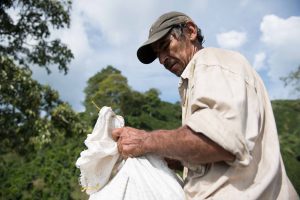
In practice, small-scale roasters will be exempt from submitting periodic due diligence declarations if their information is already included in a national database or if they work with importers who assume that responsibility.
However, the exemption does not mean a lack of responsibility. These operators must maintain traceability and retain the information for at least five years, ensuring that their coffee comes from verified sources.
The real challenge is not only technical, but also operational: understanding what information needs to be collected, how to share it and how to maintain its integrity throughout the entire value chain.
The role of importers
For import companies such as XORXIOS®, the EUDR means taking on a central role in the transition towards a more responsible supply chain. It is not just a matter of complying with a regulatory obligation, but of facilitating the adaptation of the entire coffee ecosystem.
In our case, we have adopted a two-pronged approach:
- Technical and training support for the producers and cooperatives we work with, helping them to implement geolocation and documentation processes in line with the regulation.
- Implementation of digital tools that guarantee the full traceability of each batch from its origin to its arrival in Europe, ensuring the availability of all the information required by the EUDR.
Our commitment is clear: to comply and to support.
Is this a sufficient simplification or a necessary extension?
The extension proposed by the European Commission buys time, but does not necessarily guarantee readiness. In our experience, the technical and legal understanding of the EUDR remains one of the biggest barriers.
A genuine postponement of the entry into force, going beyond a mere grace period, would allow all stakeholders – particularly producing countries – to have the time and support needed to implement robust and verifiable systems. Otherwise, the risk is clear:
- Loss of access to the European market due to formal non-compliance, not because of poor environmental practices.
- Inequality between stakeholders with technological capacity and small-scale producers.
- Information gaps that could affect the transparency of the entire supply chain.
Compliance with the EUDR is an opportunity, not just an obligation
At XORXIOS® we believe that compliance with the EUDR should not be viewed solely as a bureaucratic challenge, but as an opportunity to professionalise and strengthen the specialty coffee sector. The implementation of advanced traceability systems will enable:
- Increased consumer confidence in the origin of coffee.
- Improve the reputation of brands that demonstrate environmental responsibility.
- Facilitate access to international markets and certifications.
Sustainability, when measured and documented, ceases to be mere rhetoric and becomes a tangible competitive advantage.
The XORXIOS® Commitment: sustainability and consistency as a shared path
At XORXIOS®, we are actively working to ensure compliance with the EUDR.
Ever since we became aware that the regulation was due to come into force, we have been working closely with all our suppliers and partners at source to ensure that every batch of imported coffee is geolocated, verified and documented in accordance with the requirements of the regulation.
Our commitment is that all coffee imported from 30 December 2026 onwards will be accompanied by full documentation certifying its compliance with the EUDR. Because our duty as importers is not only to comply with the regulation, but also to help the entire value chain – producers, roasters and distributors – to comply alongside us.
The EUDR redefines the framework of responsibility within the coffee industry, and its success will depend not only on technology or deadlines, but on genuine collaboration between the various links in the chain.
In this regard, the European Commission’s amendments are a step towards more effective implementation, but the real challenge remains to transform compliance into a culture: a culture of accurate data, transparent cooperation and shared sustainability.
At XORXIOS®, we will continue to promote training and technical support as cornerstones to ensure that this transition is not a burden, but a point of evolution for the entire specialty coffee sector.