Category

Societal impact

EUDR and Specialty Coffee

By Regulations, Societal impact

The EUDR and specialty coffee: between environmental ambition and the sector’s practical viability

The entry into force of the European Union Deforestation Regulation (EUDR) marks a turning point for the entire coffee industry.

Its objective is clear: to ensure that no product entering the European market originates from land that has been deforested or degraded after 31 December 2020.

However, its implementation has sparked many debates amongst producers, importers and roasters: is it possible to uphold the EUDR’s environmental ambition without compromising the viability of small-scale players in the supply chain?

A necessary, yet complex, regulation

The EUDR represents one of the European Union’s most ambitious advances in sustainability and traceability.

For the coffee sector, this involves collecting geolocated information from the farms of origin, implementing Due Diligence Systems (DDS) and proving that products present a negligible risk of deforestation or participation in illegal practices.

However, the technical complexity and administrative burden have raised concerns, particularly amongst micro-roasters, small businesses and producer cooperatives, which face greater difficulties in implementing digital traceability systems in the short term.

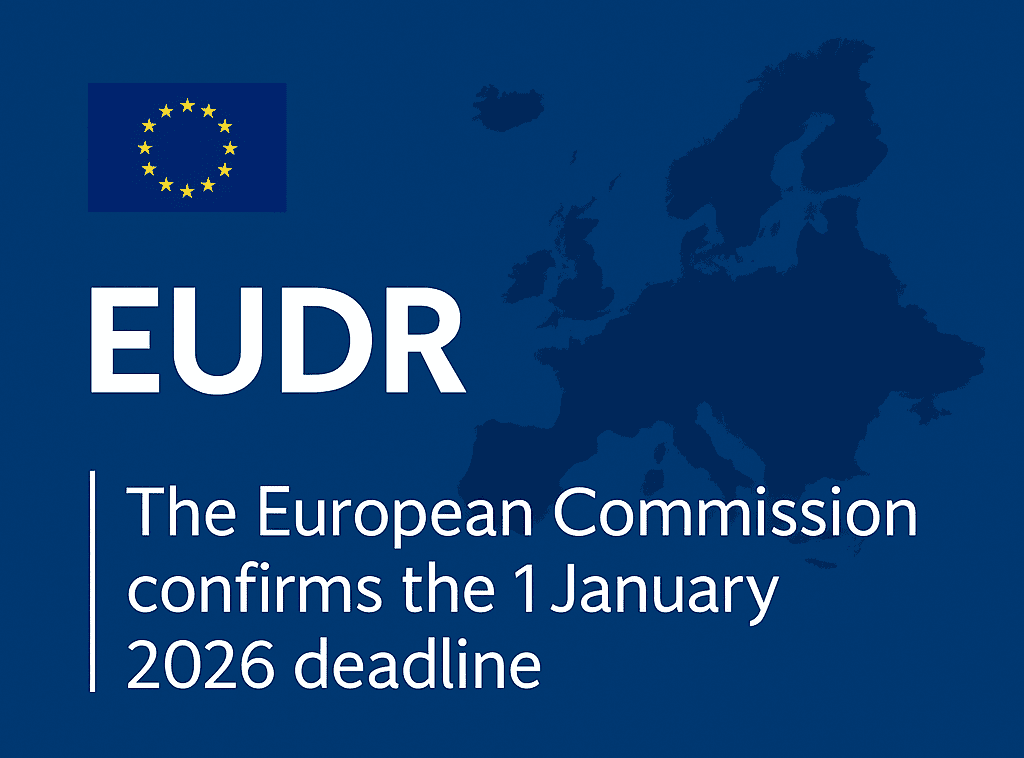
The European Commission’s new proposal offers some breathing space to SMEs

In mid-2025, the European Commission proposed a number of adjustments aimed at balancing environmental ambition with operational feasibility. Among the most notable measures are:

  • A deferral until mid 2027 for micro and small enterprises, granting them six extra months compared with mid and large enterprises.
  • Simplification of due diligence: a single declaration via the TRACES IT system, rather than multiple reports.
  • A reduction in administrative costs of up to 30 per cent.
  • Concentration of responsibility on the initial importers, who will remain primarily liable.

These changes provide real relief for small players in the sector, but they also confirm a reality: preparedness for and understanding of the regulation remain uneven across the supply chain.
What changes for micro-roasters and small-scale producers

In practice, small-scale roasters will be exempt from submitting periodic due diligence declarations if their information is already included in a national database or if they work with importers who assume that responsibility.

However, the exemption does not mean a lack of responsibility. These operators must maintain traceability and retain the information for at least five years, ensuring that their coffee comes from verified sources.

The real challenge is not only technical, but also operational: understanding what information needs to be collected, how to share it and how to maintain its integrity throughout the entire value chain.

The role of importers

For import companies such as XORXIOS®, the EUDR means taking on a central role in the transition towards a more responsible supply chain. It is not just a matter of complying with a regulatory obligation, but of facilitating the adaptation of the entire coffee ecosystem.

In our case, we have adopted a two-pronged approach:

  • Technical and training support for the producers and cooperatives we work with, helping them to implement geolocation and documentation processes in line with the regulation.
  • Implementation of digital tools that guarantee the full traceability of each batch from its origin to its arrival in Europe, ensuring the availability of all the information required by the EUDR.

Our commitment is clear: to comply and to support.

Is this a sufficient simplification or a necessary extension?

The extension proposed by the European Commission buys time, but does not necessarily guarantee readiness. In our experience, the technical and legal understanding of the EUDR remains one of the biggest barriers.

A genuine postponement of the entry into force, going beyond a mere grace period, would allow all stakeholders – particularly producing countries – to have the time and support needed to implement robust and verifiable systems. Otherwise, the risk is clear:

  • Loss of access to the European market due to formal non-compliance, not because of poor environmental practices.
  • Inequality between stakeholders with technological capacity and small-scale producers.
  • Information gaps that could affect the transparency of the entire supply chain.
Compliance with the EUDR is an opportunity, not just an obligation

At XORXIOS® we believe that compliance with the EUDR should not be viewed solely as a bureaucratic challenge, but as an opportunity to professionalise and strengthen the specialty coffee sector. The implementation of advanced traceability systems will enable:

  • Increased consumer confidence in the origin of coffee.
  • Improve the reputation of brands that demonstrate environmental responsibility.
  • Facilitate access to international markets and certifications.

Sustainability, when measured and documented, ceases to be mere rhetoric and becomes a tangible competitive advantage.


The XORXIOS® Commitment: sustainability and consistency as a shared path

At XORXIOS®, we are actively working to ensure compliance with the EUDR.

Ever since we became aware that the regulation was due to come into force, we have been working closely with all our suppliers and partners at source to ensure that every batch of imported coffee is geolocated, verified and documented in accordance with the requirements of the regulation.

Our commitment is that all coffee imported from 30 December 2026 onwards will be accompanied by full documentation certifying its compliance with the EUDR. Because our duty as importers is not only to comply with the regulation, but also to help the entire value chain – producers, roasters and distributors – to comply alongside us.

The EUDR redefines the framework of responsibility within the coffee industry, and its success will depend not only on technology or deadlines, but on genuine collaboration between the various links in the chain.

In this regard, the European Commission’s amendments are a step towards more effective implementation, but the real challenge remains to transform compliance into a culture: a culture of accurate data, transparent cooperation and shared sustainability.

At XORXIOS®, we will continue to promote training and technical support as cornerstones to ensure that this transition is not a burden, but a point of evolution for the entire specialty coffee sector.
Diana Ayala Gómez: a voice that connects continents

By Societal impact

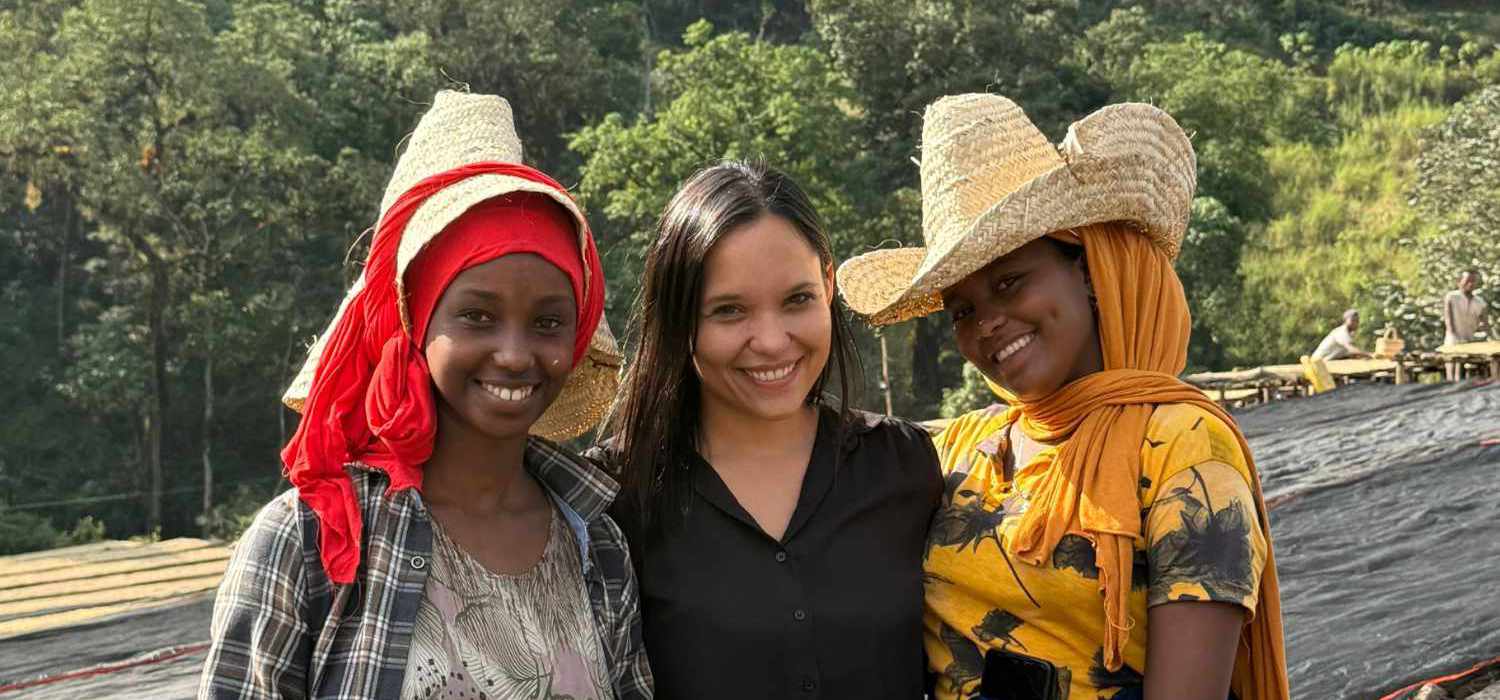
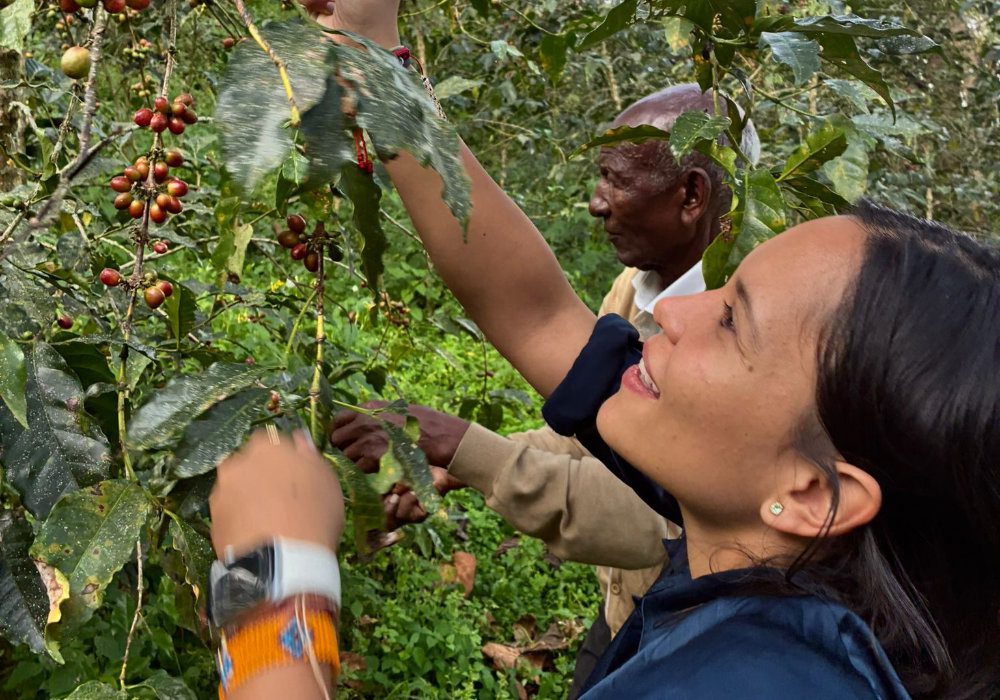
D iana Ayala has turned her passion for coffee into a bridge between continents. Originally from Colombia and now working in international trade in Europe, she combines her role at the Import Promotion Desk with the presidency of the Spanish chapter of the International Women’s Coffee Alliance (IWCA). Her career reflects not only a commitment to the quality of speciality coffee, but also to gender equality and the professionalisation of the sector.

Do you remember your first conscious connection with coffee? Was it cultural, family-related, professional… or a combination of all of these?

It has been a combination of many things. I grew up in Valle del Cauca, walking around the farm I visited every weekend with my parents and eating ripe coffee cherries. That sweetness on the palate is something you never forget. My maternal grandfather was a coffee farmer and, although he left the countryside, the passion for coffee remained in the family. My most conscious connection emerged in 2013 when, already working as an economist and international negotiator, I worked with an organisation in Cauca that represented 1,472 indigenous families and sought to export their coffee to Europe by securing fairer trade relations. It was then that I realised that coffee was not just a product: it was territory, identity, opportunities and also responsibility.

You’re Colombian and currently work in Spain. How have your identity and background influenced the way you understand this industry?

I’m fortunate to have learnt about coffee directly from those who are involved in every stage of the supply chain.

I have tasted extraordinary coffees, but I have also learnt about low-grade and second-rate coffees, travelling through coffee plantations in countries such as Colombia, Brazil, Ethiopia, Ecuador, Peru, India, Mexico and Malaysia, amongst others.
Then, working from Europe allowed me to understand the other side of the chain: consumption, roasting, trends and market demands.

I believe that today I can move between different ‘hats’ within the industry quite naturally, which helps me connect with producers, roasters, importers and baristas through empathy and mutual understanding.

You currently combine your role as president of IWCA Spain with your work at the Import Promotion Desk. What exactly does your work within this organisation involve, and how does it relate to the coffee sector?

At the Import Promotion Desk, I work as a consultant, connecting producers from countries such as Ethiopia, Tanzania, Indonesia, Peru, Ecuador and Colombia with European importers and roasters, supporting companies as they professionalise and prepare for the European market.

And there is something very special about this work: around ten years ago, I myself benefited from this support programme whilst developing my first export projects. I experienced first-hand how important it can be to have guidance, market access and people who believe in your potential when you are just starting out. That is why it gives me such great satisfaction today to be able to contribute from both sides of the experience.

Throughout your career, you have worked in international settings where power dynamics and gender issues are very much in the open. In your opinion, what are the main barriers that women continue to face in the coffee sector?

At the IWCA, we always say that we think globally and act locally; we are present in over 36 countries, precisely because the challenges women face vary greatly between producing and consuming countries.

In producing countries, the barriers are often more visible: limited access to land, finance, education, technology or leadership roles. Although women are involved in much of the production work, they often remain an invisible workforce.

In consumer markets, the barriers may be more subtle, but they still exist: lower representation in decision-making spaces or difficulty in accessing certain professional circles.

Even so, I have also seen very encouraging changes in recent years. More and more women are inheriting land, leading businesses and occupying spaces that previously seemed inaccessible.

The International Women’s Coffee Alliance (IWCA) is a global network… How did the idea of setting up the Spanish chapter come about? What is the specific mission of IWCA Spain today?

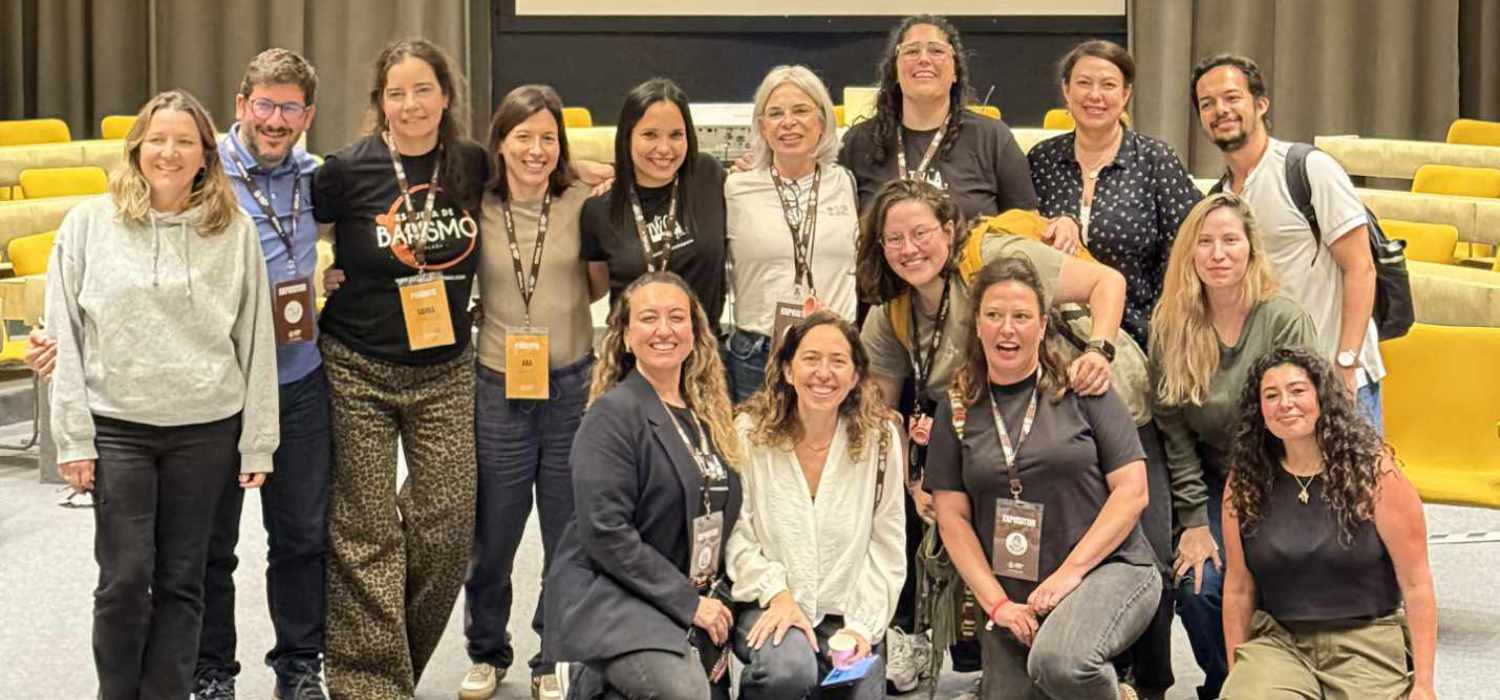
IWCA Spain was born out of a very real need. Both Chantal, my co-founder, and I felt there was a need for a space where women in the industry could meet, support one another and grow together.

There were some incredible role models in Spain, but we also felt there was a need to broaden the conversation and raise the profile of more people across the value chain.

IWCA Spain’s mission is to connect, empower and raise the profile of women across the entire coffee value chain, supporting their professional growth and fostering a more inclusive and collaborative ecosystem within the Spanish coffee industry.

How can IWCA Spain help to strengthen the link between women producers and the European market?

I have always said that no coffee project is truly sustainable without a market. Many women-led projects in producing countries have extraordinary coffees, but they do not always manage to sustain themselves because they continue to face barriers to market access.

That is where I believe IWCA Spain can add immense value: by helping to make the dialogue between supply and demand more direct and more informed. We do this by creating spaces where connections happen naturally: tastings, webinars, networking events, mentoring sessions, or meetings between women producers and professionals from the European market. Beyond simply raising awareness, we aim to foster genuine, long-lasting relationships.

Do you see any generational differences in the way women are entering the coffee sector?

Yes. The younger generations are entering the workforce with greater confidence, better training and a global outlook. More and more women are inheriting land, leading businesses or gaining qualifications in quality assurance. At a community level, many families are working to ensure their daughters do not repeat limiting patterns, and cooperatives in countries such as Peru are incorporating gender programmes into their strategies. This is bringing about structural changes and different expectations for the future.

How can a company or individual collaborate effectively with IWCA Spain?

As a non-profit association, one of the most direct ways to support us is by becoming a member and actively participating in the community. But there are many other ways to collaborate: by forming partnerships, taking part in activities, promoting training opportunities, offering mentoring, or helping to raise the profile of women’s work within the industry.

Both women and men are welcome to join, because ultimately, real impact is not achieved individually but collectively and over the long term.

Sustainability cannot be achieved through demands alone. There must be shared responsibility, support and joint investment throughout the entire supply chain.

Diana AyalaIWCA Spain

Based on your experience, what differences do you see between the European discourse on sustainability and the reality faced by producing countries?

In Europe, there is political and regulatory commitment to sustainability, but this rhetoric is often disconnected from the practical realities faced by producers. At its core, sustainability is not just about certification: it is about asking whether a family can make a decent living from coffee, whether they have access to finance, education, market stability or even land ownership. Demanding high standards without support places a burden on producers who often work in vulnerable circumstances. Sustainability cannot be built solely on the basis of demands. There must be shared responsibility, support and joint investment throughout the entire supply chain.

Do you think consumers are ready to better understand and appreciate the social impact behind the coffee they drink?

Yes, I think there is growing interest, especially within the speciality coffee sector. Consumers want to know the origin, understand who produced the coffee, and be aware of the impact of what they consume.

One of my mentors in Tierradentro, Cauca, spoke of ‘traceability with a human touch’, and I think that idea sums up very well where the industry is heading: not just knowing where the coffee comes from, but also understanding the stories and the people behind every cup.

What would you like people to say about your contribution to the sector in a few years’ time?

Rather than thinking about how I’d like to be remembered within the sector, I’d like the people who have shared this journey with me to have felt inspired, supported, or more confident in what they can achieve.

All of this is just a seed.

I come from a coffee-producing country, and coffee has taught me that the most valuable things require time, perseverance and care. My career has been made possible thanks to people who believed in me, who opened doors for me and generously shared their knowledge. Today, I feel that part of my responsibility is to give something back to the industry and help other women find their place too.

Finally, can you recommend any individuals, organisations or projects that are making a social impact in the sector and that you consider inspiring for those of us who work with coffee?

There are so many inspiring projects led by women and men within the coffee industry. But recently, one has had a profound impact on me: the work of Lucía Bawot and her SANA project.

I think it’s incredibly valuable that she’s bringing to the table such a necessary conversation as mental health within the coffee industry. We often talk about environmental or economic sustainability, but we forget the emotional and human impact that lies behind working in coffee.

And I sincerely believe that this is a conversation we need to have in both producing and consuming countries.